
Search Livingston County Booking Releases
Livingston County booking releases are public records kept by the Livingston County Sheriff's Office in Howell. These records document each person booked into or released from the county jail, including charges, bond information, and custody status. You can request historical booking records through a FOIA submission, use the state OTIS database for inmates transferred to state prison, or check VINELink for real-time custody notifications.
Livingston County Overview
Livingston County Sheriff's Office
The Livingston County Sheriff's Office in Howell handles all county jail operations and public booking records. Livingston County sits between the Detroit metro area and Michigan's capital region, bordered by Oakland, Washtenaw, Ingham, Eaton, Shiawassee, and Genesee counties. That central location means the Sheriff's Office works alongside a large number of neighboring agencies and handles bookings from both county-level arrests and transfers from municipal police departments within the county.
You can find information about the Livingston County Sheriff's Office at livingstoncounty.life/government/sheriff. The site covers department services, jail operations, and how to contact the office. If you are trying to locate a person booked in Livingston County or want to request a booking record, the Sheriff's Office is the right starting point. Staff can provide current inmate status and help you understand the records request process.
The Sheriff's Office processes bookings from all law enforcement agencies operating in Livingston County. Every arrest that leads to a jail stay creates a booking record. Those records are maintained by the Sheriff's Office and are subject to public access under Michigan law.
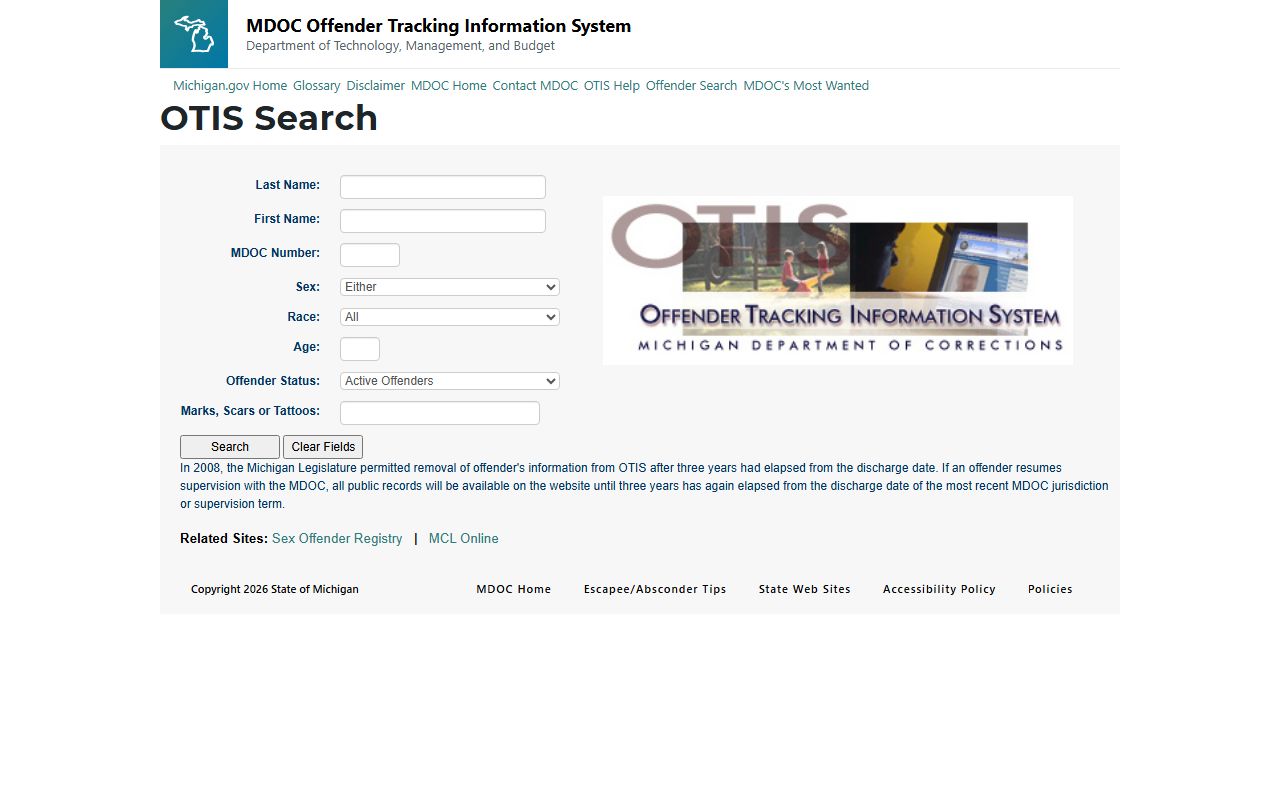
Michigan's OTIS system lets you find Livingston County inmates who have been transferred to MDOC state facilities after a conviction and prison sentence.
Livingston County Jail and Booking Records
The Livingston County Jail is the county's main detention facility. It holds pre-trial detainees, meaning people who have been charged but not yet convicted and are waiting for their cases to move through the courts. The jail also holds sentenced inmates serving shorter terms of usually less than two years. Jail services include visitation for family members and attorneys, commissary, inmate communication, and basic medical care for people in custody.
Booking and release records from the Livingston County Jail follow a standard format. Each record includes the person's full legal name, date of birth, booking date and time, the arresting agency, the charges at intake, the current bond or bail amount, housing location within the facility, and release information when the person exits custody. Charges may be modified as the case moves through the court, so a booking record reflects the status at intake unless updated records are specifically requested.
For current inmate status, contact the Livingston County Sheriff's Office directly. Jail rosters may not always be available online, or they may not update in real time. Calling the office is the most reliable way to confirm whether a specific person is currently in custody at the Livingston County Jail.
Note: If someone was arrested by a Livingston County agency but transferred to another facility due to medical needs or other reasons, they may not appear in the main jail roster.
Requesting Booking Releases Through FOIA
Under Michigan's Freedom of Information Act, codified at MCL 15.231, booking releases and arrest records are public. The law's stated policy is that all people except those currently incarcerated have the right to full information about government acts. Booking and arrest data created by the Livingston County Sheriff's Office falls under this public access rule.
To request booking releases from the Livingston County Sheriff's Office, submit a written FOIA request. You can submit it by mail, email, fax, or in person at the Sheriff's Office in Howell. Your request should describe the records you need. Include the person's full name, the approximate date range for the booking, and any other details that help narrow the search. The office has 5 business days to respond. If the request involves a large amount of records or extensive search work, they can extend the response period by up to 10 additional business days with written notice.
The response will tell you whether your request is granted, denied, or partially fulfilled. If the records are denied, the office must cite the specific exemption under MCL 15.243 that applies. Most booking releases do not qualify for exemption. Exemptions are reserved for things like records that could interfere with an active investigation or identify a confidential informant. Standard arrest and booking data for completed cases is typically available.
FOIA allows agencies to charge for labor, duplication, and mailing costs. A deposit may be required if estimated fees exceed $50. People with financial hardship can file an Affidavit of Indigency to waive up to $20 of processing fees. This waiver is available twice per calendar year under Michigan FOIA law. In Evening News Association v. City of Troy (1983), the Michigan Supreme Court confirmed that police records are presumptively public, supporting your right to access Livingston County booking data.
OTIS for State-Level Livingston County Inmates
When someone is convicted of a serious crime in Livingston County and receives a prison sentence of more than two years, they transfer to a Michigan Department of Corrections facility. At that point, the county jail no longer holds them, and their records move to the state system. The MDOC maintains OTIS, the Offender Tracking Information System, which is the central database for all state-level inmates, parolees, and MDOC-supervised probationers.
OTIS is free to use at mdocweb.state.mi.us. You need at least a last name or MDOC offender number to search. The system supports wildcard searches using an asterisk after at least three characters. Results show the person's current status, facility or supervision location, charges, and important dates like the earliest release date and maximum sentence date. You can filter results by first name, gender, age, race, and supervision status.
Status codes in OTIS tell you where the person stands: PRISON means in an MDOC facility, PAROLE means released to community supervision, PROB means probation supervised by MDOC, and DISCHRG means the sentence is completed. Records stay in the system for 3 years after discharge. Learn more about MDOC at michigan.gov/corrections. OTIS does not cover people currently held in the Livingston County Jail.
VINELink for Livingston County Custody Alerts
VINELink is a free victim notification system that covers the Livingston County Jail and most other Michigan county jails, as well as all MDOC state facilities. The service lets you look up an inmate's current custody status and register to receive automatic alerts when that status changes. Alerts can come by phone, email, or text message, and the system is available 24 hours a day.
To use VINELink, go to vinelink.com and search by name, case number, or inmate ID. If the person you are looking for is in the Livingston County system, you will see their current custody status. From there, you can register to be notified of releases, transfers, and other custody changes. VINELink tracks both county and state custody, so you can follow someone from the county jail through state prison and back if that path occurs.
VINELink is especially helpful when you are not sure whether someone is still in county custody or has been transferred to state prison. The system updates when custody events occur, making it more current than relying on manually updated rosters. It works well alongside a direct call to the Livingston County Sheriff's Office for immediate questions.
What Livingston County Booking Records Include
Booking releases from the Livingston County Jail capture key details about each arrest and intake. When law enforcement brings someone to the jail, staff collect identifying information and process the charges. That process creates the booking record that is then part of the public record system. The record follows the person through their time at the facility and gets updated when they are released or transferred.
A standard Livingston County booking record contains the person's full legal name, date of birth, booking date and time, the name of the arresting agency, the charges filed at intake, the bond or bail amount set by the court, and the release date and reason when the person exits custody. Some records also show housing assignment and any holds from other agencies, such as warrants from neighboring counties or federal detainers.
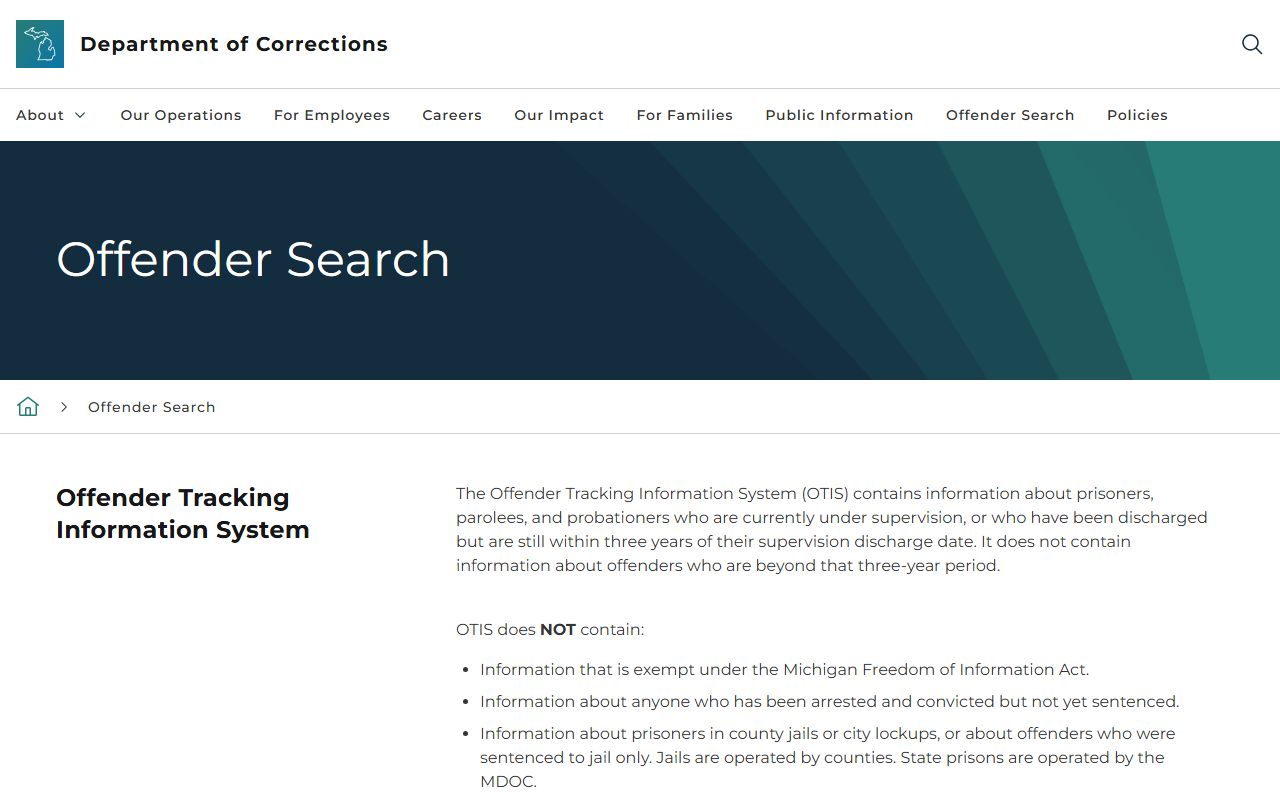
The MDOC offender search tool complements Livingston County's local booking records by covering inmates who have moved from county custody to state prison facilities.
Michigan ICHAT Criminal History Search
The Michigan State Police offers ICHAT, the Internet Criminal History Access Tool, at michigan.gov/msp/services/ichat. This database covers felony convictions and serious misdemeanors from all 83 Michigan counties, including those originating in Livingston County. Unlike a booking record, ICHAT only shows convictions that have been reported to the state and not arrests that did not result in a guilty finding.
ICHAT requires a full name and date of birth to search. There is a fee for each search, paid online by credit card. The tool does not show juvenile records, federal cases, traffic violations below the serious misdemeanor level, or arrests that did not result in conviction. ICHAT is most useful when you need a broad conviction history across all Michigan counties, rather than information about a specific booking event in Livingston County.
Note: If you need a complete picture of someone's history in Livingston County, use both the county's FOIA process for booking data and ICHAT for conviction history. They cover different parts of the record.
FOIA Exemptions That May Apply
While most booking releases in Livingston County are public, some records or parts of records may be withheld under exemptions in MCL 15.243. The privacy exemption can apply when releasing specific details would constitute a clearly unwarranted invasion of privacy. This most often comes up with information about victims, particularly in sensitive crimes. In Pennington v. Washtenaw County Sheriff (1983), the court found that identifying information for a sex crime complainant was exempt on privacy grounds. That same reasoning can apply to records from other counties including Livingston.
Law enforcement exemptions can also block parts of a record when disclosure would interfere with an active investigation or deprive someone of a fair trial. These exemptions are narrow and do not apply to routine booking data for cases that have already been adjudicated. The name, charges, bond, and release information in a standard booking record are generally not protected by any exemption.
If the Livingston County Sheriff's Office denies part of your FOIA request, they must tell you which specific exemption applies to the withheld information. You have the right to appeal a denial. The appeal goes first to the head of the public body and then to circuit court if necessary.
Cities in Livingston County
Livingston County includes Howell as the county seat, along with Brighton, Hartland, and several townships. No cities in Livingston County meet the population threshold for individual city pages on this site. All county-level booking activity for the area is processed through the Livingston County Sheriff's Office in Howell.
Nearby Counties
Livingston County borders six Michigan counties. Each has its own sheriff's office and jail booking records system. If you cannot find a record in the Livingston County system, the arrest may have occurred in a neighboring jurisdiction.