
Search Michigan Booking Releases
Michigan booking releases are split between two systems. State prison and parole records live in the MDOC Offender Tracking Information System. County jail booking releases are held by each of Michigan's 83 separate sheriff offices. This site helps you find the right place to look, whether that's a state prison database, a county inmate roster, or a city police department's public records office. Use the search tool below to start looking up Michigan booking releases now.
Michigan Booking Releases at a Glance
Michigan's Two-Tier Booking Record System
Two separate record systems cover booking releases in Michigan. The state handles prisoners sentenced to more than one year. Counties handle the rest. If someone is in a state prison or on parole, their record is in the MDOC Offender Tracking Information System, known as OTIS. If someone was held in a county jail — for a short sentence, while waiting for trial, or on a lesser charge — their booking record is with the county Sheriff's Office. City police departments make arrests, but most transfer inmates to county jails after processing.
That split matters when you search. OTIS does not show county jail inmates. County systems do not show state prisoners. There is no single database that covers all booking releases in Michigan. Knowing which system to check first saves a lot of time and confusion.
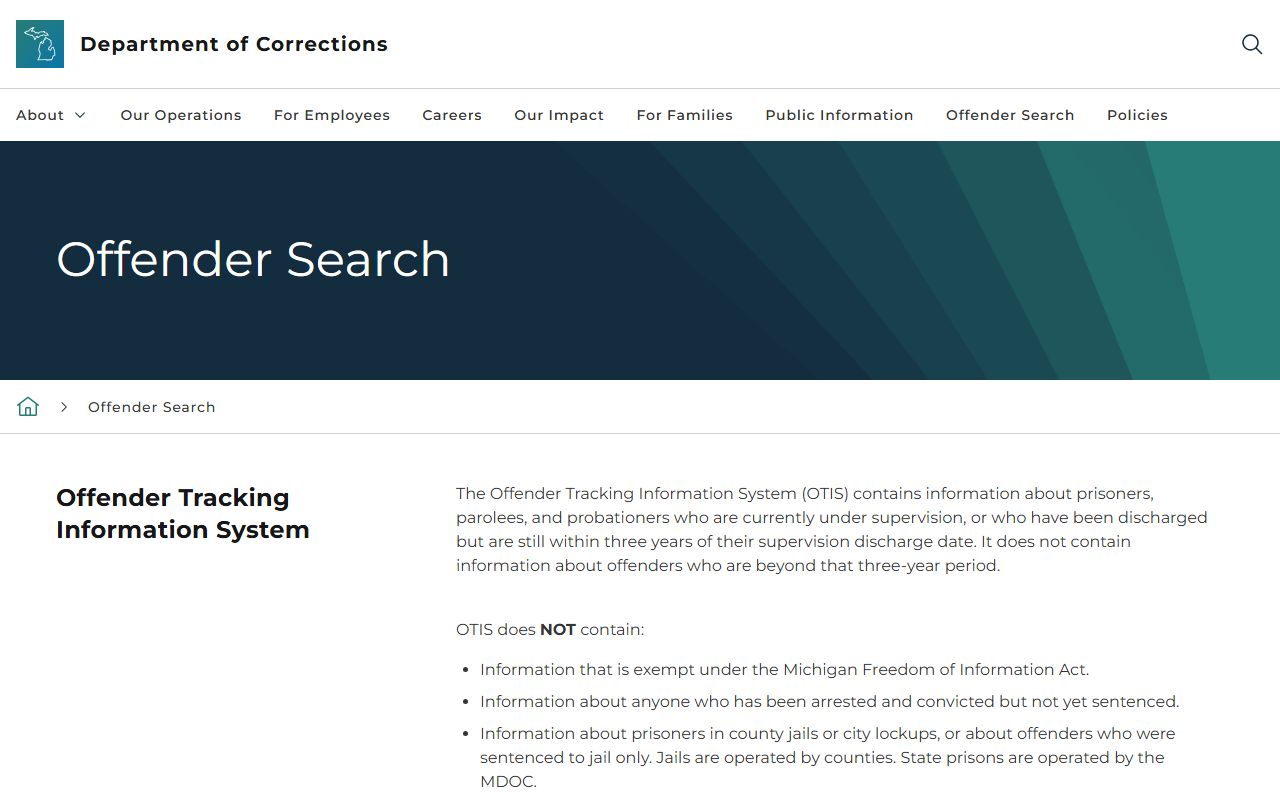
The Michigan Department of Corrections website is the main starting point for state-level lookups. For county records, you go directly to the Sheriff's Office in the county where the arrest happened. For city police arrest reports, you submit a FOIA request to the police department. VINELink at vinelink.com bridges the gap between systems by covering both county jails and MDOC facilities in one place.
Michigan Booking Releases Through the OTIS System
OTIS is the primary tool for state prison and parole records in Michigan. The system holds records for current prisoners, parolees under MDOC supervision, and probationers supervised by MDOC for circuit courts. It also keeps records for offenders who discharged within the last three years. Once three years pass after a discharge, the record is removed unless the person resumes supervision.
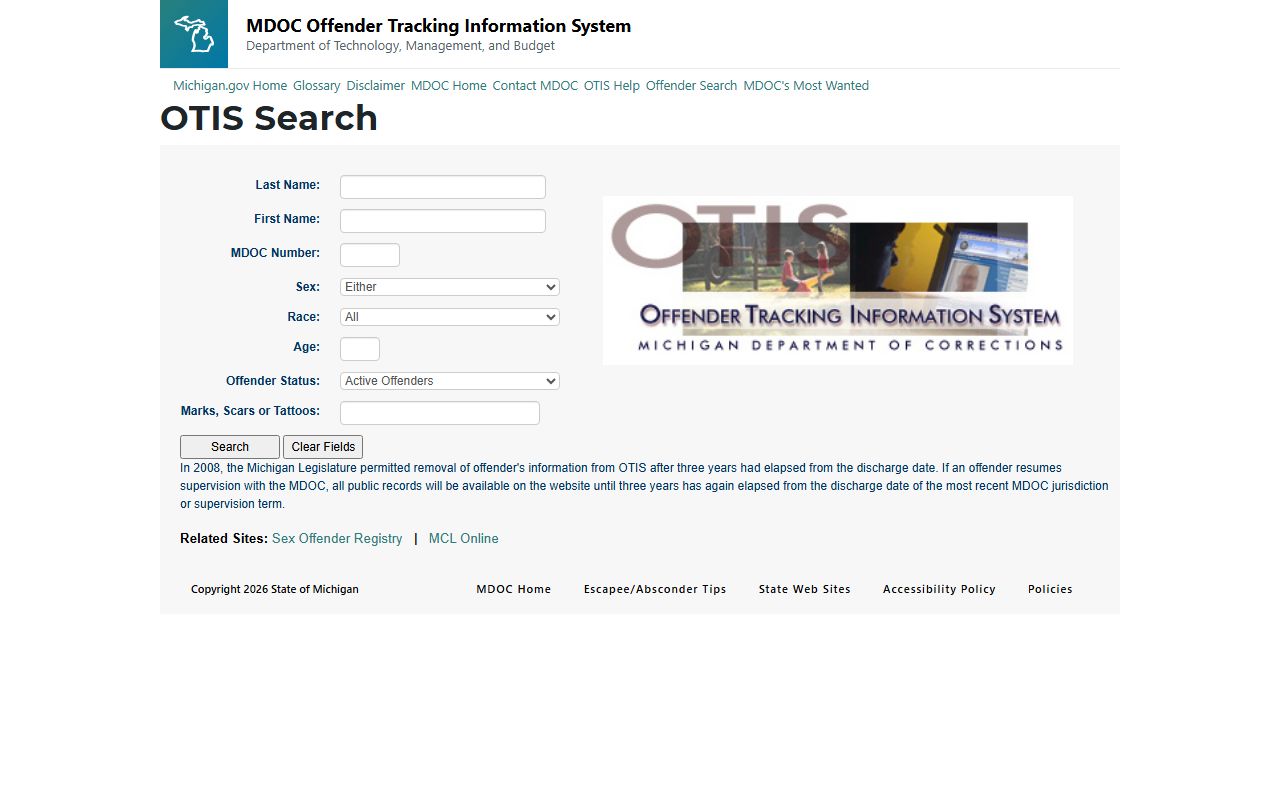
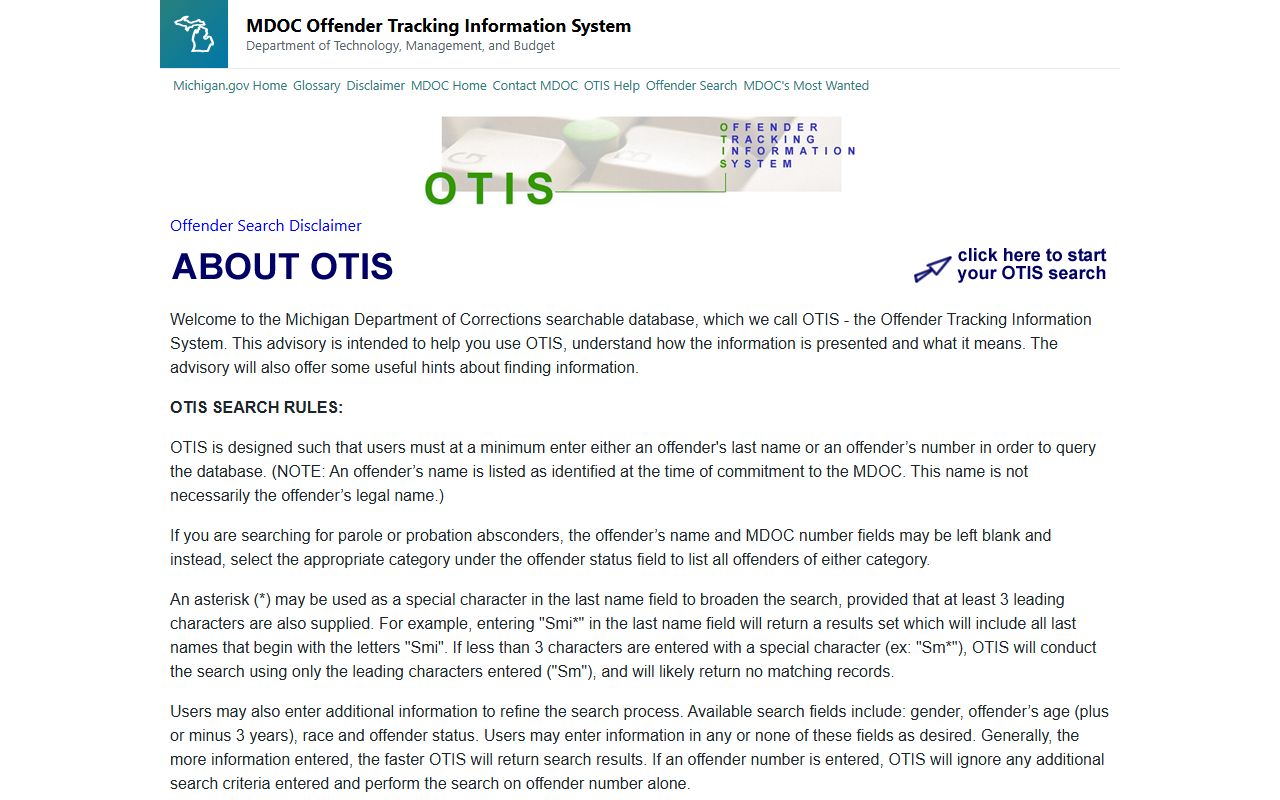
You can search OTIS at mdocweb.state.mi.us. At minimum, you need the person's last name or their MDOC number. Searches are not case-sensitive. A wildcard (*) works in the last name field, but you need at least three leading characters. "Smi*" returns all last names starting with those letters. "Sm*" does not work. You can narrow results by adding first name, gender, age, race, or current supervision status.
Status codes in OTIS tell you where someone stands. PRISON means currently incarcerated at a state facility. PAROLE means released and under community supervision. PROB is probation. ESCAPE1 and ESCAPE2 cover different escape classifications. ABSCOND1 means a parole absconder. DISCHRG means the sentence ended. The system also shows the offender's MDOC number, date of birth, current location, and earliest release date.
OTIS has real limits. It does not show county jail inmates, federal inmates, juvenile records, or anyone discharged more than three years ago. The name listed in OTIS may not match the person's current legal name since it's recorded as identified at the time of commitment. Do not use OTIS for identity verification or official background checks.
Note: If you need to report a prison escapee in Michigan, email CORREMC@MICHIGAN.GOV. To report a parole absconder, contact ARUOUTSTATE@MICHIGAN.GOV.
County Jail Booking Releases Across Michigan
Each of Michigan's 83 counties runs its own jail and keeps its own booking records. There is no single statewide database for county booking releases. You must go to the specific county where the arrest occurred. Most Sheriff's Offices provide some form of online inmate lookup, but the detail and accessibility vary a lot by county.
Wayne County runs the largest jail system in Michigan through its new Criminal Justice Center. Their online inmate search is at sheriffconnect.com. The Wayne County Jail Dashboard at sheriffconnect.com/dashboard is updated daily and shows current inmate population, demographic breakdowns, booking types, length of stay data, and counts of releases. It was built with support from the Hudson-Webber Foundation and Detroit Wayne Integrated Health Network as a transparency tool.
Kent County Sheriff at kentcountymi.gov operates the only nationally accredited adult county jail in Michigan. Their online inmate lookup at kentcountymi.gov/1280/Inmate-Lookup shows current booking data, charges, and bond information. The Genesee County Jail at geneseecountyjail.org serves Flint and the surrounding area with a capacity of 580 inmates and accepts bookings from multiple agencies including the U.S. Marshal's Service.
For smaller counties or those without a direct online search tool, VINELink is the best fallback. It covers most Michigan county jails and all MDOC facilities in one free search.
VINELink for Michigan Booking Releases
VINELink is a nationwide automated notification system available free of charge. It covers most county jails in Michigan along with all MDOC facilities. You can search by name, case number, or ID number at any hour without a fee. The system shows current custody status including booking, release, and transfers.
Victims can register on VINELink to receive automatic alerts when an inmate's status changes. Notification options include automated phone calls, email, and text message. TTY access is available for the hearing impaired. You can track multiple cases at the same time. Attorneys and concerned citizens can also register. The service is available in English and Spanish. To register or search, go to vinelink.com.
Michigan Criminal History Through ICHAT
The Internet Criminal History Access Tool (ICHAT) is run by the Michigan State Police. It shows public conviction records from all 83 Michigan counties. ICHAT covers felony convictions and serious misdemeanors punishable by more than 93 days. Data comes from law enforcement agencies, prosecutors, and courts statewide. There is a fee per search, and you need to look up individuals one at a time.
To search, you need a full name and date of birth. ICHAT is at michigan.gov/msp/services/ichat. It does not show county jail booking records, arrests that did not result in conviction, juvenile records, traffic violations, or federal charges. Use ICHAT when you need conviction history. Use OTIS or a county Sheriff's search when you need current custody status or recent booking releases. The two tools serve very different purposes.
Requesting Michigan Booking Releases Under FOIA
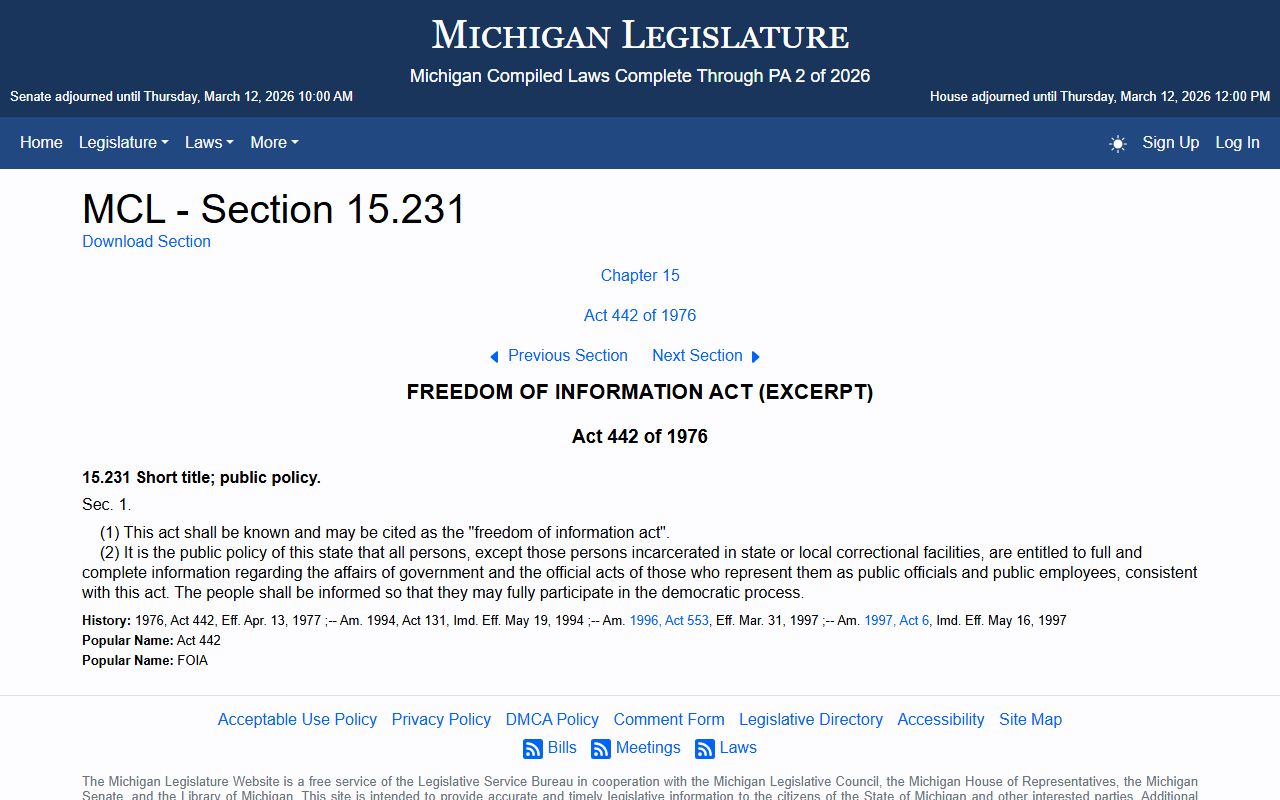
Michigan's Freedom of Information Act is at MCL 15.231. It gives the public the right to access government records including booking releases, arrest reports, and jail rosters. Anyone can request these records except those currently incarcerated in state or local correctional facilities. You do not need to give a reason for your request.
A written request must describe the record well enough for the agency to find it. For police records, most agencies ask for the incident date and time, the address where it happened, and names of people involved. You can submit by email, fax, mail, or in person. The agency must respond within five business days. They can extend that by up to ten additional business days with written notice if the request involves a large volume of records or requires consultation with another agency.
Fees can apply under MCL 15.234. Agencies may charge for labor, copies, and mailing. If total costs are likely to exceed $50, they can require a deposit upfront. Fee waivers are available through an Affidavit of Indigency for people receiving public assistance or with demonstrated financial hardship. Up to $20 of the total fee can be waived, and this discount is available up to twice per calendar year.
Some arrest records may be partially withheld. Under MCL 15.243, agencies can redact details that would identify confidential informants, interfere with active investigations, or constitute an unwarranted invasion of personal privacy. Michigan courts have addressed this multiple times. In Evening News Association v. City of Troy (1983), the court held that police incident reports are generally public. A public body must show that a specific exemption applies to justify any denial.
What Michigan Booking Releases Typically Show
A standard county jail booking record shows the person's full name, date of birth, booking date, charges, bail or bond amount, and current status. Many also include housing location within the jail, scheduled release date if set, and a case number. The level of detail varies by county system. Some jails publish full roster data online. Others require a phone call or FOIA request to get the same information.
Police arrest reports contain more. They list the date and time of arrest, the location, officers involved, offense description, and how the case was disposed. These reports are separate from jail booking records. A city police department handles the arrest report. The county jail handles the booking record. If you need both, you may need to submit requests to two different agencies.
OTIS records at the state level add supervision-specific detail. They show the MDOC number, current facility or supervision location, controlling offense with a link to the Michigan Compiled Laws for that statute, parole board jurisdiction date, and the offender's maximum sentence date. The system also shows status history including parole and discharge dates when applicable.
Law Enforcement Information Network and Public Access
Michigan's Law Enforcement Information Network (LEIN) is a statewide system used by law enforcement, courts, and authorized agencies. It holds criminal record data, sex offender registry information, warrants, personal protection orders, and much more. LEIN is not available to the general public and is not subject to FOIA requests. Only authorized agencies can access it.
For the public, OTIS, ICHAT, and county jail inmate search tools are the primary options. LEIN exists in the background as the data infrastructure that feeds some of these systems. When you search ICHAT, the Michigan State Police is pulling from records that originate in LEIN-connected systems. Understanding this distinction helps explain why some records appear in one tool but not another.
For victim notification, MCL 791.225 requires the state to give notice to prosecutors and registered victims before a prisoner is released. VINELink is the main tool for this in Michigan, working alongside the MDOC's own notification procedures.
Browse Michigan Booking Releases by County
Each of Michigan's 83 counties maintains its own sheriff's office, jail, and booking records. Select a county below to find local inmate search tools, FOIA contact info, and booking release resources for that area.
Booking Releases in Major Michigan Cities
City police departments process arrests and generate booking reports. Most transfer inmates to the county jail after processing. Select a city to find police department records contacts, FOIA request procedures, and county jail information for that area.